


Premier League in Chaos After Fictional VAR “Secret Recheck” Awards Arsenal a Late Goal 🔥
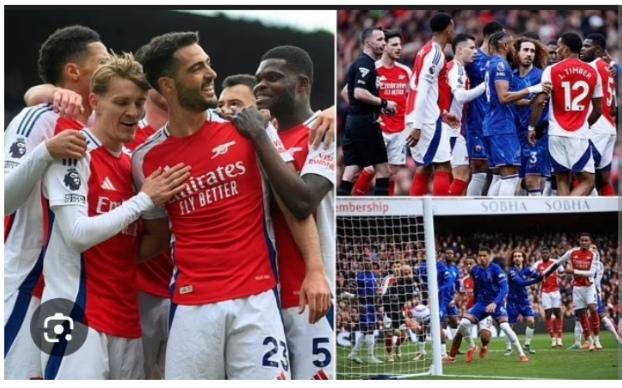
The Premier League has been plunged into utter turmoil in this fictional scenario, as circulating claims allege that PGMOL quietly stepped in after the match to award Arsenal a goal following a covert VAR re-evaluation — a decision that fans say has shattered what little trust remained in the officiating system.
Fans Outraged: “This Changes EVERYTHING!”
According to the dramatic rumours inside this fictional story, the original VAR decision was deemed a “clear and obvious” mistake.
What followed, allegedly, was a silent, late recheck, carried out while play had already moved on — ultimately concluding that Arsenal’s penalty shout was “100% correct.”
The supposed reversal has triggered a tidal wave of fury:
- “This is a joke league now.”
- “VAR is officially broken.”
- “How can a goal be awarded after the game has moved on?”
Every corner of English football — from rival fans to pundits — is engulfed in disbelief.
A League in Crisis: “What Are We Even Watching Anymore?”
Within this fictional narrative, supporters have slammed the idea of a retroactive decision, calling it one of the most embarrassing officiating controversies in years.
Social media timelines are overflowing:
“If this happened in another league, we’d mock them. Now it’s happening here.”
“VAR was supposed to fix chaos. Instead, it’s creating new kinds of chaos.”
“PGMOL needs a total reset.”
The incident has reignited long-standing tensions over VAR transparency and has raised uncomfortable questions about fairness in pressure-filled matches.
The Fallout: Title Race, Top Four & Trust — All Affected
In this fictional world, the implications are enormous:
- The title race is now under scrutiny.
- Top-four battles could be reshaped.
- And most importantly, trust in VAR has hit an all-time low.
Players, fans, coaches and analysts are all left asking the same haunting question: